Skip to the specimen
Feathers, Skeletons & Nests

Skeletons

Bones compared across animals, bird wings included

Vertebrate skeletons compared: homologous and vestigial structures, one bone group followed across species, and bones that changed jobs, drawn so the same bone keeps the same colour in every animal; human anatomy appears only as a cross-species comparison, with no advice on bones, joints or posture.

6 entries; the first one opens the drawer.

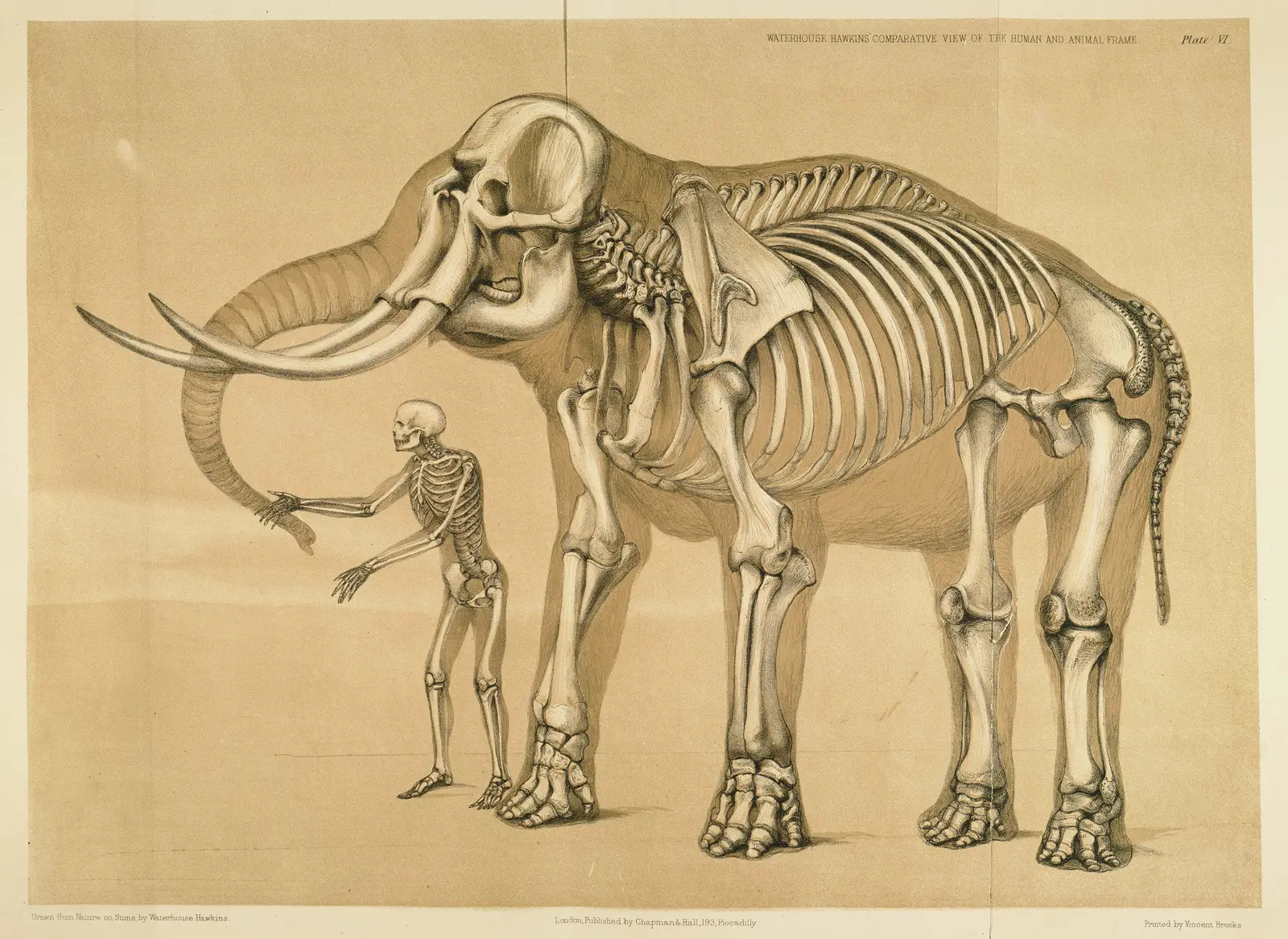
Lithograph of a human skeleton standing beside an elephant skeleton, both drawn in profile

Homologous Structures: Same Bones, Different Counts

Homologous structures share an ancestor, not a bone count. Finger-bone counts for three whales, a horse and a human hand: same order, very different numbers.

Kind
In-depth explainer
Added
Picture credit

"Plate VI, Man and the elephant, from A Comparative View of the Human and Animal Frame" by Benjamin Waterhouse Hawkins — https://commons.wikimedia.org/wiki/File:Comparative_view_of_the_human_and_elephant_frame,_Benjamin_Waterhouse_Hawkins,_1860.jpg — Public domain (US: published 1860; EU: artist Benjamin Waterhouse Hawkins d. 1894, who drew the plate on stone himself (printer Vincent Brooks, dates not checked))
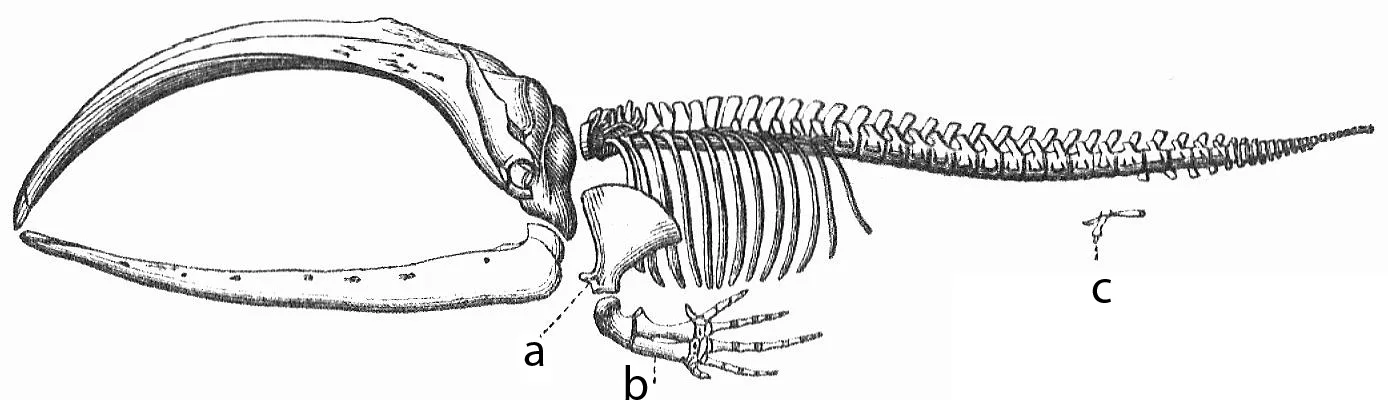
A baleen whale skeleton drawn side-on, with a tiny hind-leg remnant marked c below the backbone, behind the ribs

Vestigial Structures: A Whale’s Hip Bones Anchor Muscles

Kind
Comparison and reading
Added
Picture credit

"Skeleton of a baleen whale, from Meyers Konversations-Lexikon, 4th edition" by Unknown author, Meyers Konversations-Lexikon (1888) — https://commons.wikimedia.org/wiki/File:Whale_skeleton.png — Public domain (US: published 1888, before 1931; EU: anonymous work published 1888, more than 70 years ago)

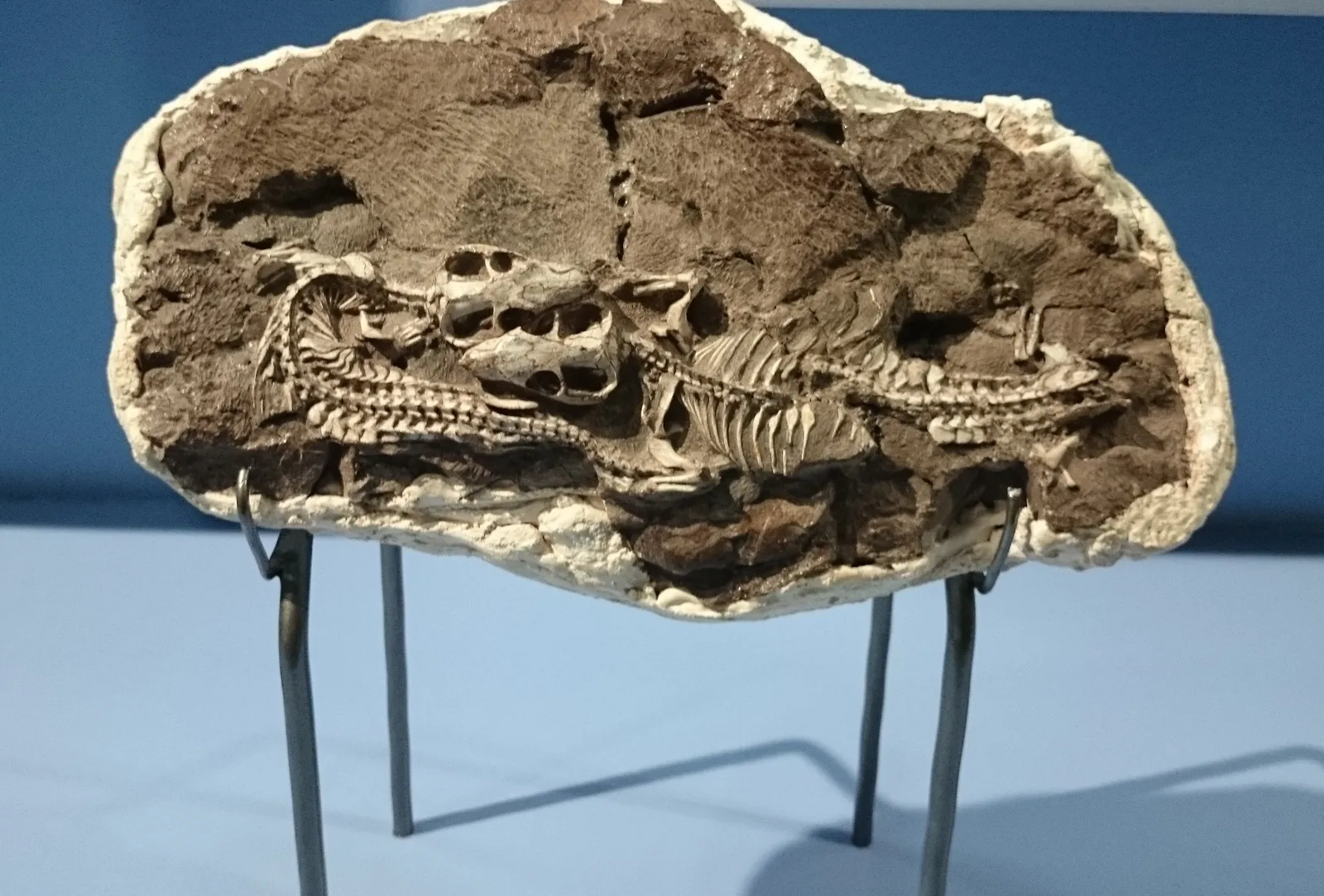
Thrinaxodon fossil block on a museum stand: two small skulls near the middle, with ribs and backbones curling around them

Middle Ear Evolution: Two Jaw Bones Became Ear Bones

Kind
In-depth explainer
Added
Picture credit

"Thrinaxodon fossil, Iziko South African Museum" by Nkansahrexford — https://commons.wikimedia.org/wiki/File:Iziko_Thrinaxodon_fossil.JPG — CC BY 3.0 (https://creativecommons.org/licenses/by/3.0/); modified: cropped: top 120 px removed (museum display panel with printed text above the fossil block)

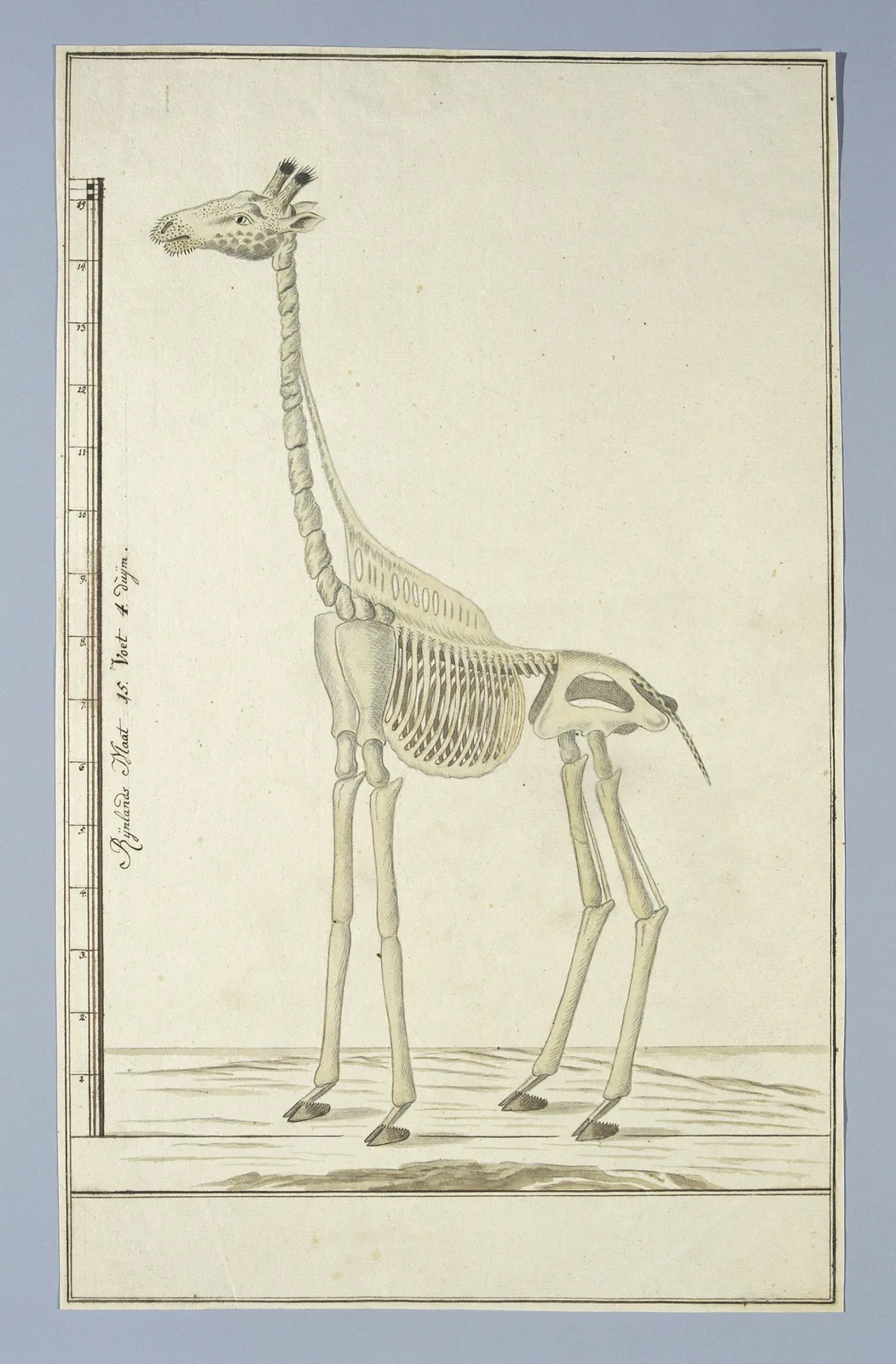
Ink and watercolour drawing of a giraffe skeleton standing side-on, with a long upright neck and a scale bar at the left

How Many Bones in a Giraffe Neck? Seven, Like Most Mammals

Kind
Specimen entry
Added
Picture credit

"Giraffa camelopardalis (Giraf), skelet, from the Robert Jacob Gordon drawings" by Robert Jacob Gordon / Rijksmuseum — https://commons.wikimedia.org/wiki/File:Giraffa_camelopardalis_(Giraf),_skelet,_RP-T-1914-17-152.jpg — CC0 1.0 (https://creativecommons.org/publicdomain/zero/1.0/)

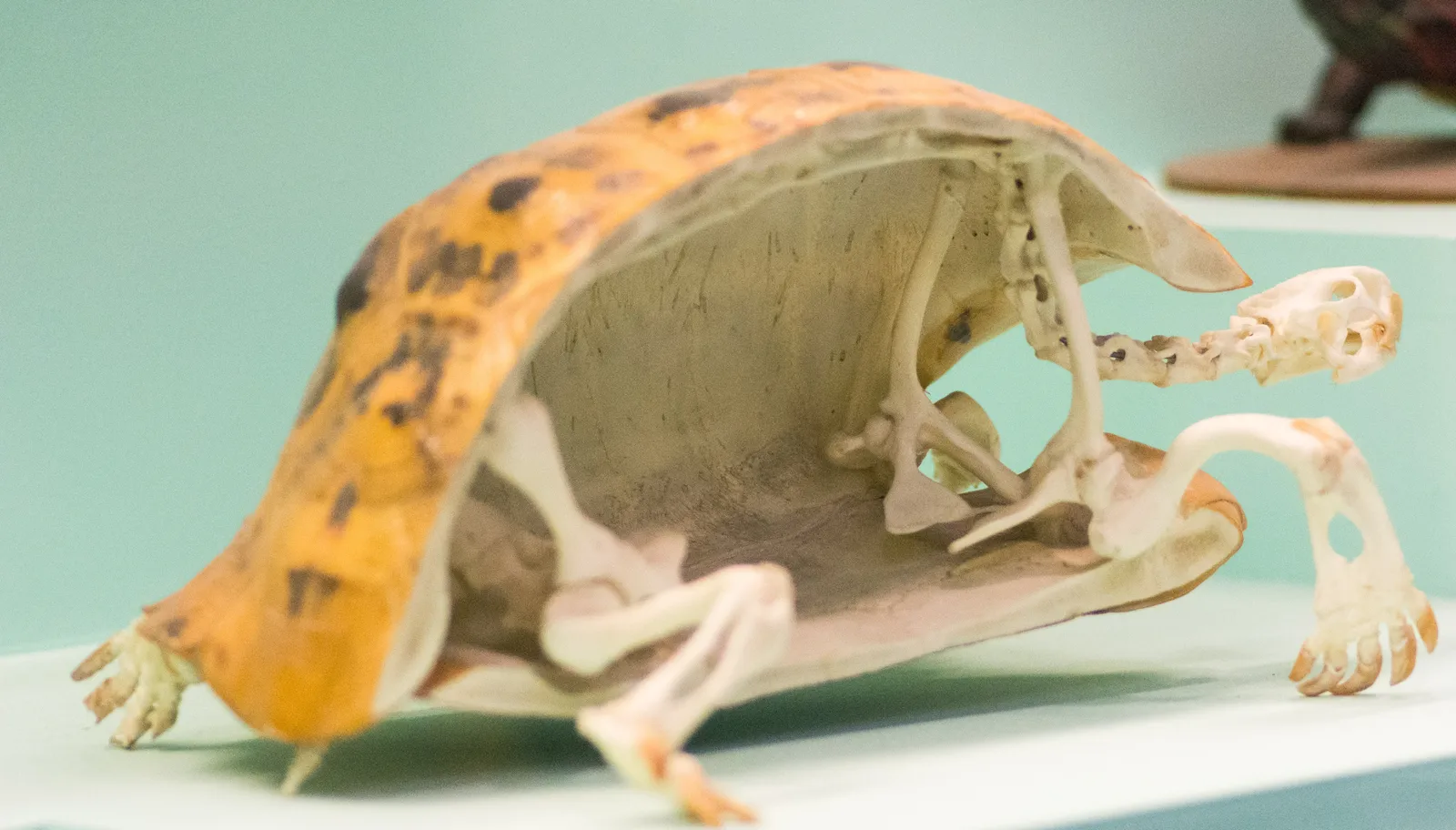
Tortoise skeleton in a museum case, one side of its shell cut away, its limb bones hanging under the shell roof

Turtle Shell: Its Ribs and Backbone Are Part of the Shell

Kind
Specimen entry
Added
Picture credit

"Turtle skeleton cross-section" by Peter Taylor — https://commons.wikimedia.org/wiki/File:Turtle_skeleton_cross-section_(46292294134).jpg — CC BY 2.0 (https://creativecommons.org/licenses/by/2.0/); modified: cropped: bottom 552 px removed (museum display panel with printed text below the skeleton), cropped: right 348 px removed (most of a second mounted turtle at the top right)

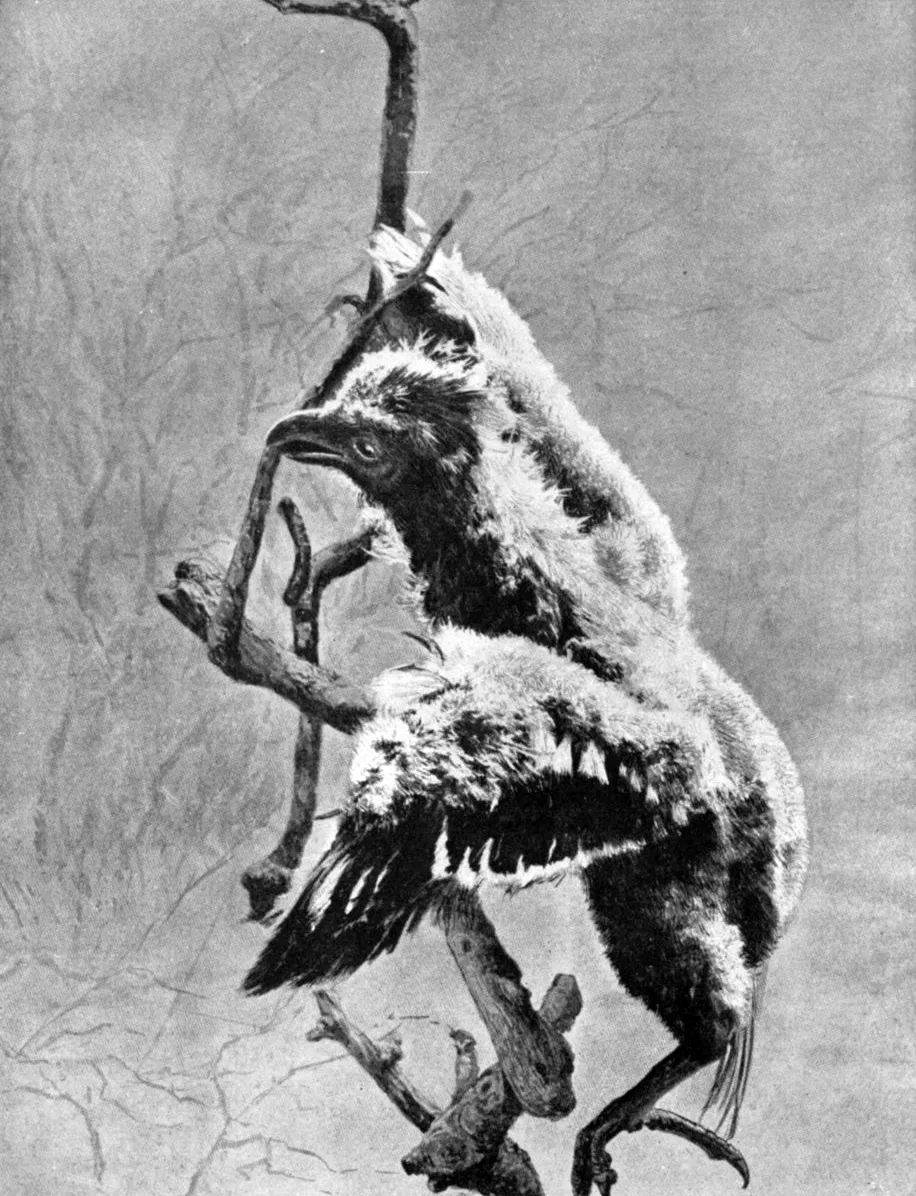
Black-and-white picture of a downy young hoatzin gripping a bare branch, one wing held out below its body

Bird Wing Bones: Usually Three Digits, but Which Three?

Kind
Comparison and reading
Added
Picture credit

"The Hoatzin Inhabits British Guiana, from The Outline of Science, vol. 1" by Unknown author, in J. Arthur Thomson (ed.), The Outline of Science, vol. 1 (1922) — https://commons.wikimedia.org/wiki/File:Hoatzin_chick.jpg — Public domain (US: published 1922, before 1931; EU: anonymous work published 1922, more than 70 years ago (no photographer or artist credited in the book; original maker not traced); editor J. Arthur Thomson d. 1933)